Setting - One of the most common settings for the crime genre is America. This could possibly be because this is where the directors are from however it still remains as a popular and iconic setting for crime films. An example of this could be in the Southern States of America where drug smuggling is a common crime. An alternate setting could be a car, possibly in a high speed chase away from the police. A more broad setting choice may be a dark scene in which it is difficult to see the identity of the characters in order to hide themselves and make them appear more scary or simply to keep them away from the police. Furthermore, it may be somewhere out of the way of the general public so as to keep their crime undercover. For example in Reservoir Dogs Harvey Keitel's character spends a large time of the film in a warehouse type place hidden out of the way of the city.
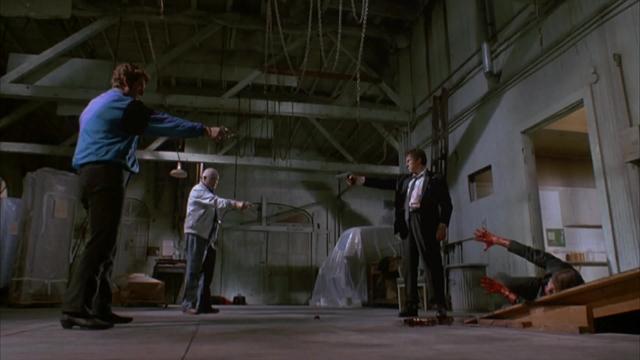
Narrative - A common narrative for a film in the crime genre is starting with some kind of planning of a crime or giving some perspective upon why there will be a crime taking place. After this the crime generally takes place and then after this there is success after some kind of issue making it seem unlikely. However it is not uncommon for the ending not to be entirely happy. For example one character may finish the movie having been caught or killed. A general theme within all of the different narratives is the search for monetary gain from their crime.
Characters - The lead character in crime films is almost always a male. They are often very deeply indulged into the life of crime and it is a way of life for them. For example, Vincent Vega in the Pulp Fiction film seems as though he doesn't question the way he is leading his life. Although there are examples of films that use female lead characters such as Jackie Brown, she is not as deeply involved in the life of crime as the male lead characters. She only indulges in it for quick money and isn't the kind of hardened criminal that is so stereotypical to the crime genre. I don't feel that it would be a good idea to try and create this hardened criminal type of female character as it is not something that people expect to see and doesn't fit stereotypes within the genre, however it would be interesting to see how this may be done.
Another convention of characters is that of crime couples. Two good examples of this is Bonnie and Clyde and also Mickey and Mallory Knox from Natural Born Killers. This adds a new dynamic to a crime film in that the two characters are in a relationship or together which would obviously affect the way they act towards each other.

Editing - Generally the editing of scenes in the crime genre is dependent on the part of the film and the nature of the action. For example if it is a fast paced scene, such as when the crime is being committed then the editing is more likely to be fast and intense in order to create an almost action type feel which engages the audience and perhaps lets them know that it is the climax of the story line. Alternately it may be edited in a more slow paced way if there is a particularly poignant moment between two characters. For example, in Pulp Fiction at the end when Jules is talking to Ringo with the gun pointed at him, the scene has more of a slow paced feel to make it clear to the audience how serious the situation is. Another way that editing is sometimes used is slow motion. For example, in the clip below (from around 5:40), slow motion is used to heighten the emotion and action of the scene creating an intense scene to watch for the audience.
Another part of editing that is often used in the crime genre is montages. The clip below is a good example of the way that montages can be used. In this clip it shows a broad range of events and the montage was effective in this because you can show many things at once.
Iconography - One obvious prop that is a famous aspect of the crime genre is a gun. This is something you see in the majority of crime films as a weapon of choice for most of the criminal characters. Another famous prop is money. It represents the reward for the characters for their crime and is symbolic of what they are working towards and why they risk their lives. Finally there is also the iconic costume of a suit which represents the organised element of the crimes that they are committing.

Camera Work - One camera shot that is commonly used within crime films is a close up on the characters face:
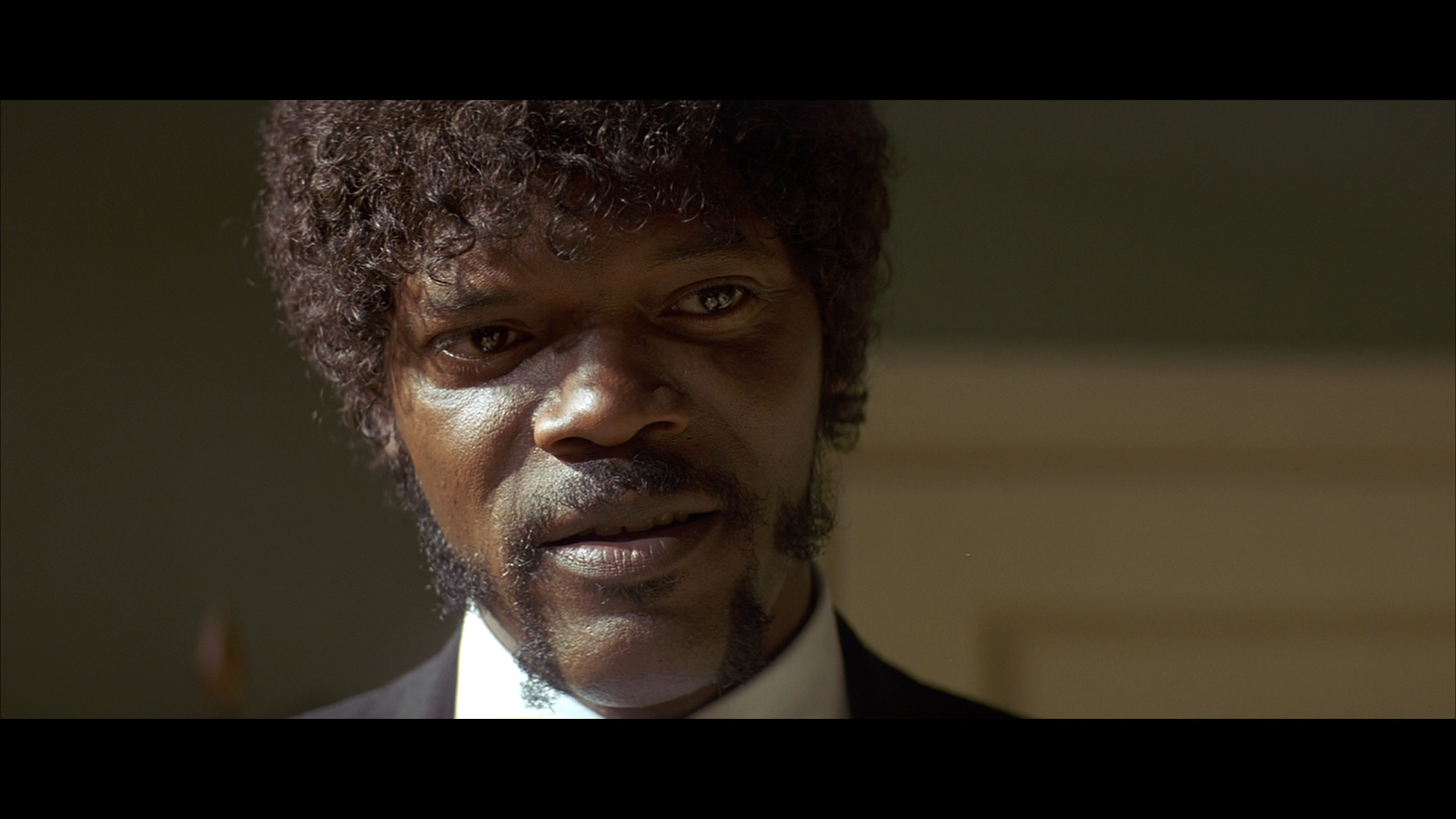
The use of this shot shows the character's emotions to the audience making it clear what they are feeling. This could be to build tension over what they are about to do and what they are planning. For example in the shot above, it shows the anger in Jules' face and makes him seem more intimidating.
Another shot used is a low angle shot:

The low angle shot gives the characters in shot (usually the criminals) a elevated status and portrays them as powerful individuals. The above shot is also a trunk shot and it shows how they are looking down on the police officer in the car and reduces his status and embarrasses him.
A final prominent shot is a mid shot:
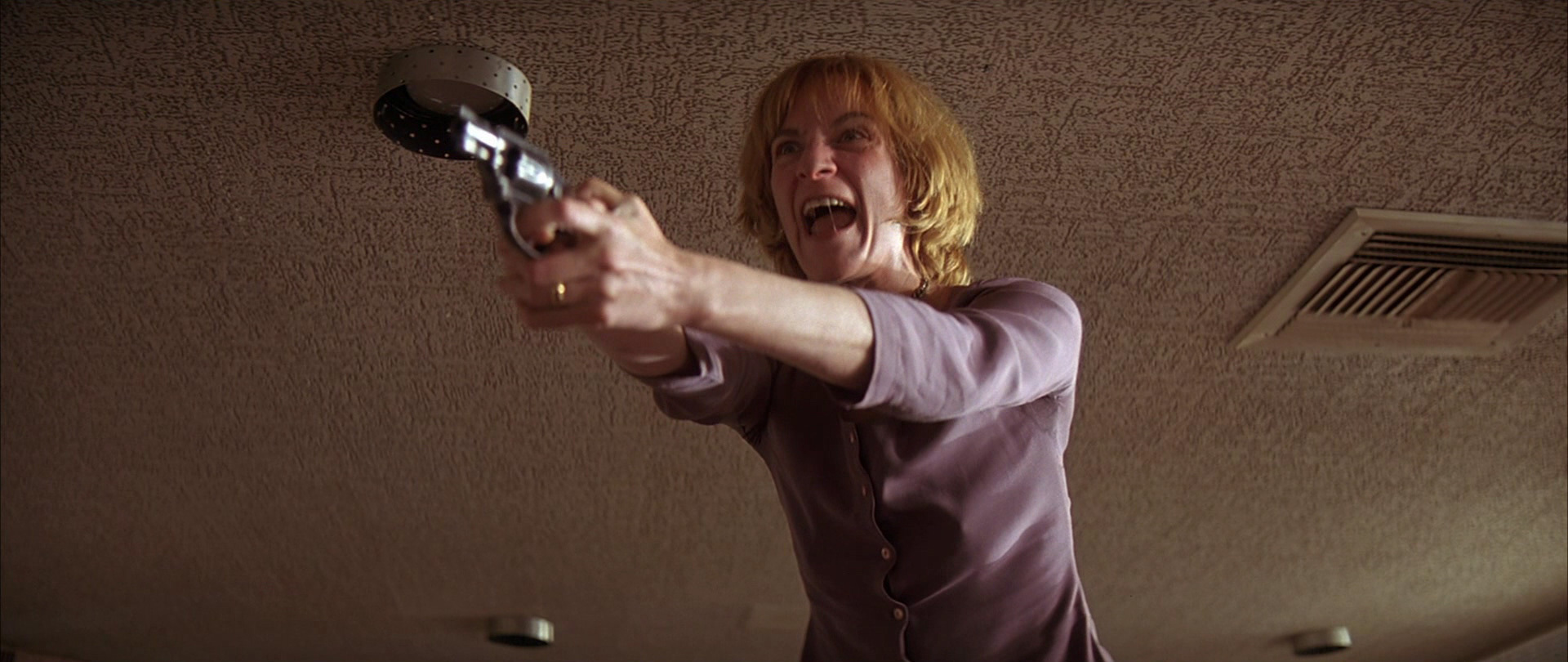
The mid shot is most often used to show a character holding a gun. It gives a clear idea of their facial expression and how they are feeling but also shows the fact that they are holding a gun to the audience.
Sound - Generally there is music used in crime films that is quite high paced with a quick beat adding to the action of a situation. Whilst it is part of the title sequence, the song 'Little Green Bag' in Reservoir Dogs is an iconic piece of music in a film. However songs may also be slower paced to represent an emotional moment or an intense scene. A common ambient sound within the genre is the sound of the police sirens. This may be to suggest they are being chased. There is also the iconic gun shot sound which captures the feeling of violence that the gun shows. This is definitely something that I want to use in our clip as we are using a gun, and therefore I would like it to sound realistic and also impact the audience in the way somebody being shot should.

No comments:
Post a Comment